Why Coloring Pages Are More Than Just a Fun Activity
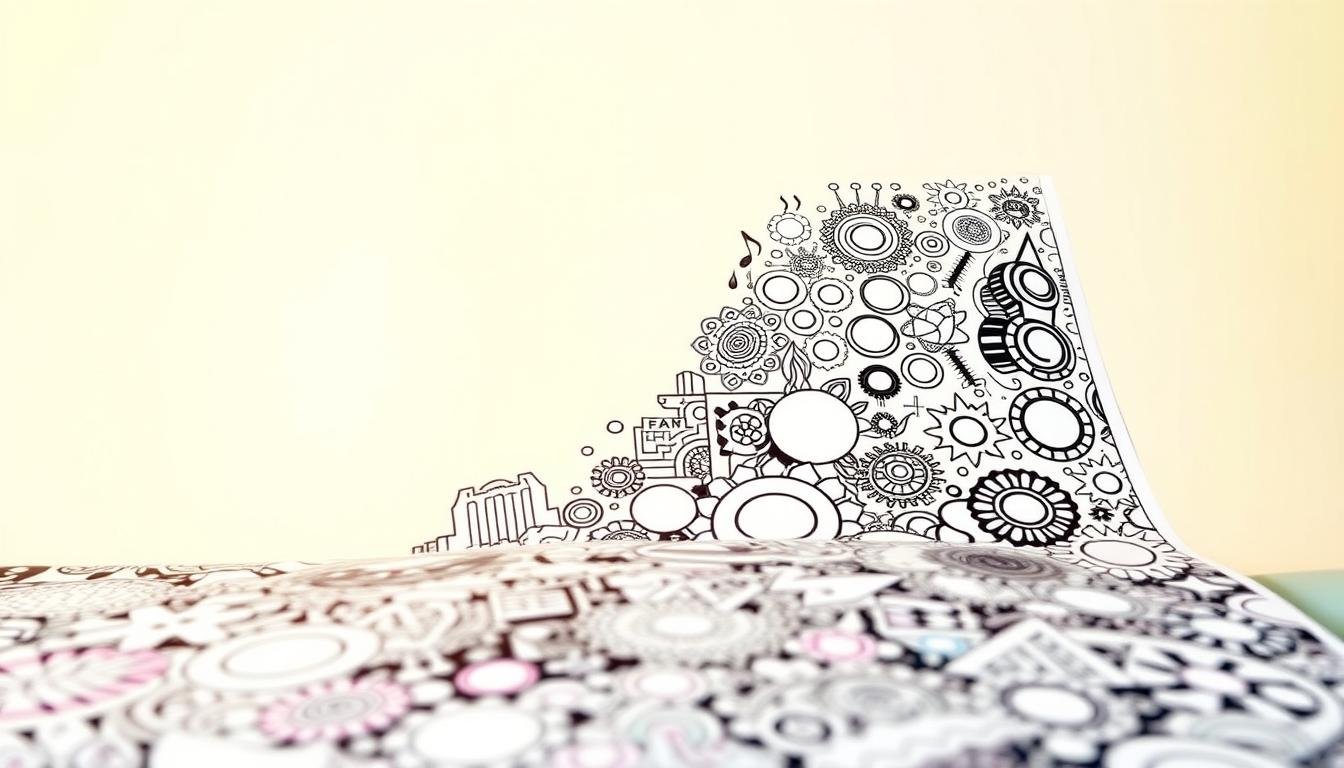
Over 50 million adults in the U.S. use coloring books each year to relax. This shows how it has become a popular way to reduce stress, not just for kids.
Coloring does more than just entertain. It helps improve focus, lowers anxiety, and boosts creativity. It’s now used in offices and therapy to help both the mind and emotions.
Key Takeaways
- Coloring reduces stress hormones like cortisol by up to 25%, per recent research.
- It enhances fine motor skills while fostering imaginative thinking in all age groups.
- Over 70% of mental health professionals recommend it as a low-cost wellness practice.
- Regular coloring sessions improve concentration and patience levels, aiding daily productivity.
- Access to free online resources makes it a widely accessible self-care activity.
The Art of Unwinding: Stress Relief Through Coloring
Coloring is more than just filling in lines. It’s a mindful activity that quiets the mind and lowers tension. When stress piles up, picking colors and using a pencil or marker can distract us from daily worries. This creative act is a path to stress relief, available to anyone looking for peace.
Finding Tranquility in Vibrant Hues
Colors are crucial in coloring’s role in relaxation. Cool colors like soft blues and greens slow down our heart rates and calm our nerves. Bright colors like yellows and oranges lift our mood. Neutral colors like grays and browns bring stability. This mix of colors creates a peaceful space where stress fades away easily.
Simple Relaxation Techniques for Busy Lives
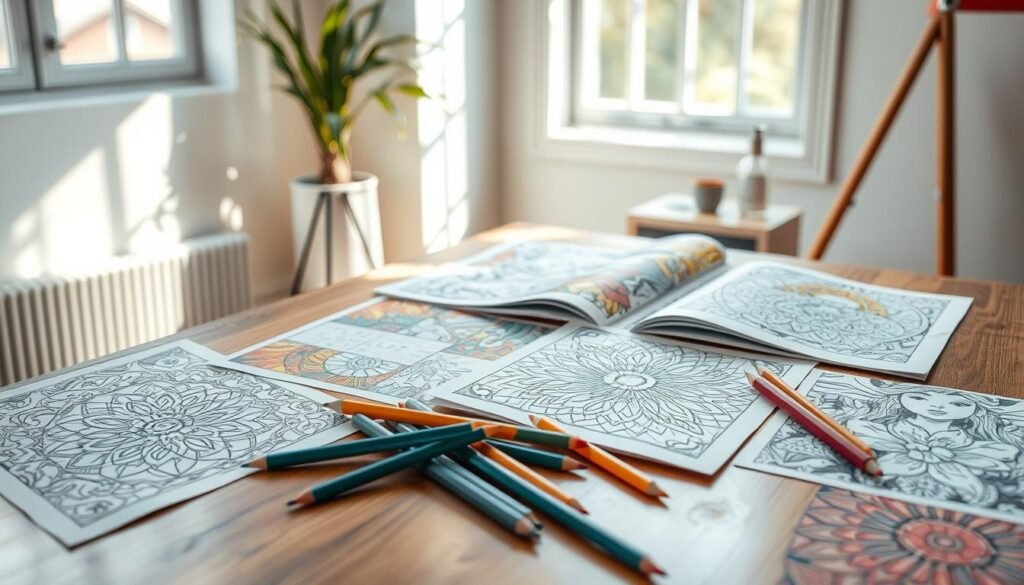
- Choose Your Palette Wisely: Start with colors that match your mood. Blues and greens for calmness, or vibrant reds for energy.
- Follow the Rhythm: Let the steady motion of coloring become a meditative rhythm. Focus on the flow of the pencil or pen to anchor yourself in the moment.
- Set a Timer: Even 10-15 minutes daily can make a difference. Use this time as a scheduled break from stress.
By adding these techniques, coloring becomes a daily habit. It’s a simple, affordable way to handle stress without needing much. Whether at home or during a lunch break, this practice fits into any busy schedule.
Boosting Creativity: How Coloring Sparks Innovation
Coloring is a great way to boost your creativity enhancement. It lets your imagination run wild with simple choices. By picking colors and patterns, you move away from daily worries and dive into creative thinking.
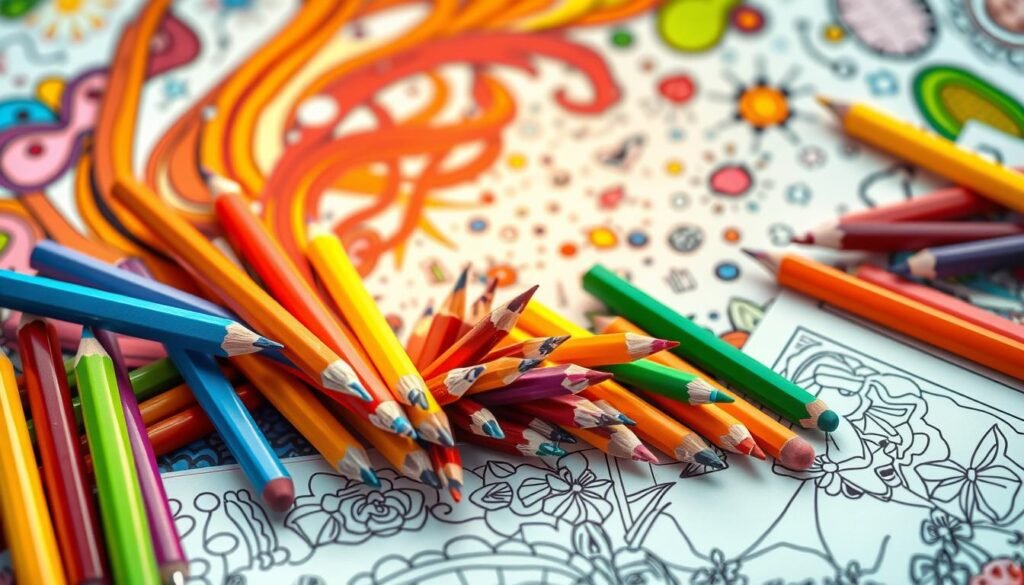
- Trying out different colors helps your mind think outside the box.
- Doing the same thing over and over boosts your confidence to try new things.
- Working on shading problems makes you better at solving creative challenges.
Research from the Journal of the American Art Therapy Association found that 78% of people got more creative after coloring. Books like Johanna Basford’s Enchanted Forest show how detailed designs push your brain to think differently. This ability to adapt helps you solve problems at work or school.
Coloring also makes you more detail-oriented. Picking colors for a mandala or landscape teaches you to make decisions. This practice turns coloring into a way to spark innovation in your daily life.
Mindfulness Practice and Coloring: A Meditative Journey
Coloring is more than just a hobby; it’s a path to mindfulness. It helps us focus on patterns and colors, taking our minds off distractions. This simple act brings calm and clarity, aligning with mindfulness practice.
Coloring as a Tool for Focused Meditation
Choose detailed designs to keep your focus sharp. Each line or color you add keeps you present. Studies show this focus can calm the mind, similar to meditation. Here’s how to start:
- Find a quiet spot with little noise
- Choose a design that catches your eye but isn’t too complex
- Color while breathing deeply, feeling the paper and colors mix
Integrating Coloring into Daily Mindfulness Routines
Set aside 10–15 minutes each day. Use it as a morning pick-me-up or an evening calm-down. Apps like Colorfy or Mindful Coloring make it easy to practice anywhere. Regular coloring improves focus and emotional balance. It turns coloring into a mindful habit that boosts mental health.
Enhancing Cognitive Development Through Coloring
Coloring makes the brain work harder, improving cognitive development in small but big ways. It challenges the brain to process colors and make choices. This helps with focus and understanding space.
It also helps solve problems, like picking the right colors or staying on the lines. These tasks keep the brain sharp and ready for more challenges.
- Visual perception improves as users interpret shapes and patterns.
- Attention to detail strengthens through consistent practice.
- Memory retention is boosted by recalling color schemes and repetition.
For kids, coloring is key for learning basic skills like hand-eye coordination and fine motor control. It helps them get ready for school. For adults, it keeps the mind sharp and can even slow down memory loss.
Studies show that coloring boosts brain connections, helping with cognitive development for life. It’s a fun way to exercise the brain, encouraging creativity and thinking skills.
Coloring is great for people of all ages. Schools and workplaces use it to improve thinking skills. It shows that simple coloring can make our minds sharper and better at solving problems.
Emotional Well-being: Transforming Mood with Colors
Coloring connects creativity with emotional balance. Every line or color change can change our view, turning stress into calm. It uses our mind’s power to heal through art.
Nurturing Emotional Resilience Through Art
Choosing colors is like speaking our emotions. Blues and greens calm us, while oranges and yellows lift our spirits. Research shows picking colors wisely helps us understand and control our feelings, building strength over time.
Coloring Techniques for Self-Care and Mood Improvement
- Mindful Swatching: Try different color mixes to match your mood—soft pastels for calm, bold colors for energy.
- Gradient Journeys: Mixing colors next to each other brings peace, showing emotional balance.
- Pattern Repetition: Filling in detailed designs keeps our mind busy, cutting down on worries.
These techniques make coloring a daily way to improve our mood. Making small, thoughtful choices in art builds positive habits. It shows that creativity and emotions are closely linked.
From Hobby to Therapy: Recognizing the Therapeutic Activity
Coloring has changed from a simple hobby to a recognized therapeutic activity. It’s now used in mental health to help with anxiety, depression, and PTSD. Studies show that coloring can lower stress hormones, helping people feel better emotionally.
- Art therapists like Dr. Maria Gonzalez use coloring books to help patients manage chronic stress.
- Hospitals such as Boston’s McLean Hospital include coloring in recovery programs.
- A 2022 study in the Journal of Art Therapy found 78% of participants reported mood improvements after weekly coloring sessions.
Today, clinics and schools add coloring to their wellness programs. Mental health experts say it’s great for self-expression, even if you’re not artistic. This shows how hobbies can become accepted therapies when science supports them. As more places use coloring, the difference between fun and therapy gets smaller. It shows how creativity can really help our well-being.
Exploring the Benefits of Coloring: Insights and Perspectives
Coloring does more than just relax us. It brings people together, creating a sense of community. Groups all over the world have formed around this calming activity. They show how it can be a relaxation technique for everyone.
Community Experiences and Shared Joy
Groups like the “Colorful Calm Collective” meet weekly. They share stories of less stress and stronger friendships. People say that these sessions:
- Encourage teamwork over competition
- Give safe places for self-expression
- Help build friendships through shared goals
Expert Opinions on Coloring as a Relaxation Technique
Psychologists agree that coloring is good for our minds. Dr. Lena Torres from Mindful Minds Institute says: “Structured coloring uses the brain’s prefrontal cortex, stopping anxiety.” The American Art Therapy Association found 78% of people felt calmer after 20 minutes. Experts say:
- Coloring lowers cortisol, a stress hormone
- Helps us focus on the present, like meditation
- Allows us to express feelings without words
These findings show that coloring is not just a hobby. It’s also a proven relaxation technique.
Embracing the Journey with Color
Coloring changes daily life by offering a path to emotional well-being. Every pencil stroke or stylus tap deepens your mental connection. It’s not just a trend—it’s a tool that grows with you, adapting to life’s changes.
Regular coloring builds habits that nurture focus and calm. It’s flexible, fitting into busy schedules without needing perfection. Whether it’s intricate mandalas or bold patterns, each session boosts patience and mindfulness, strengthening emotional well-being.
Make coloring a key part of your personal growth. Try new styles, share with friends, or use it as a quiet break. Its simplicity makes it accessible, and its impact on emotional health is lasting. By embracing color, you invest in a healthier mindset, one page at a time.